In short
If a LiftMaster, Chamberlain or Genie opener in South Windsor hums, clicks or ignores the remote, it can usually be repaired. A technician checks the door's balance first, then the opener, and tells you plainly if replacing it makes more sense.
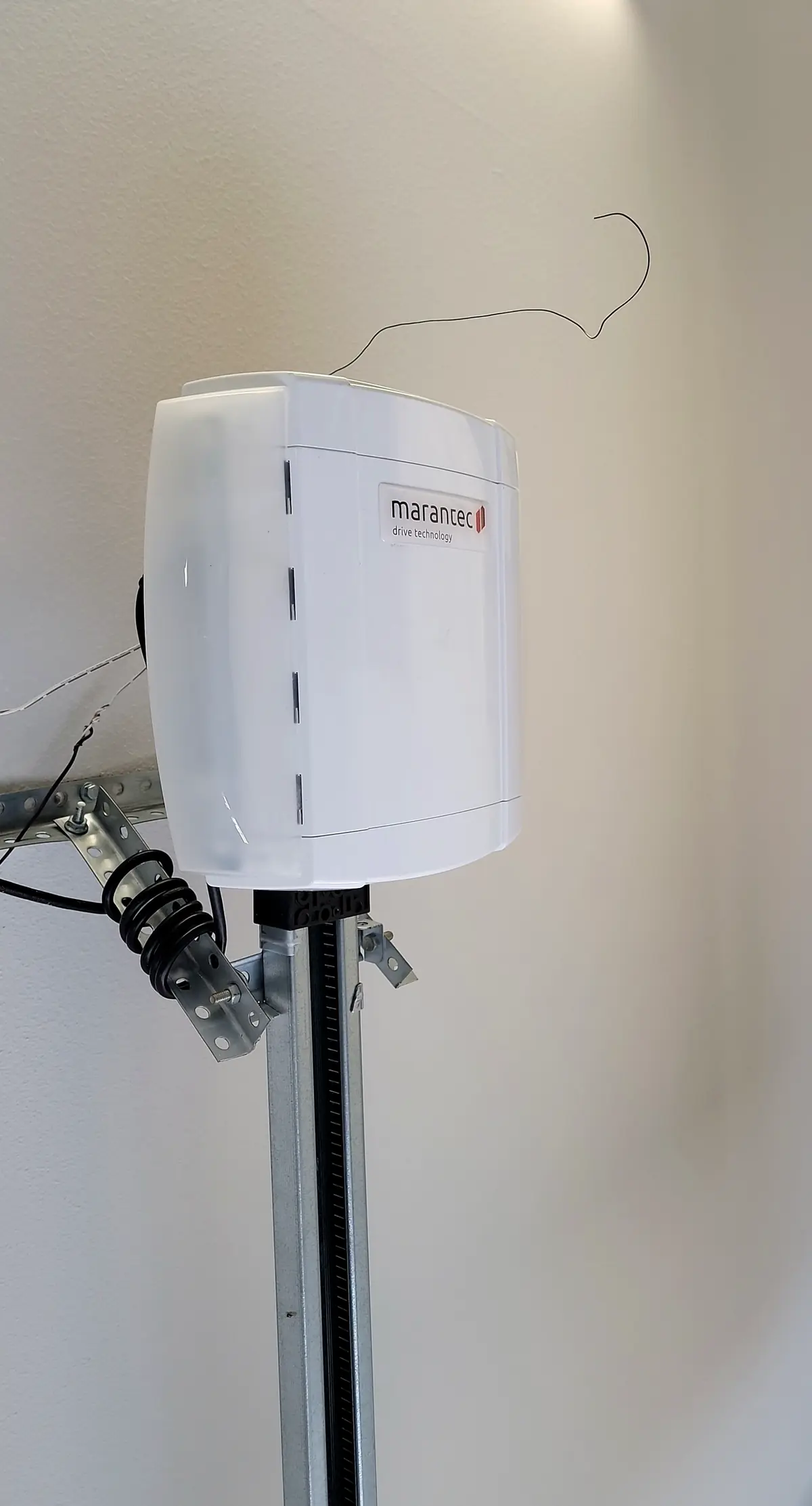
Openers we see in South Windsor
South Windsor grew fastest from the 1960s to the 1990s. In Wapping, Avery Heights and on the east side, colonials and raised ranches have attached two-car garages with openers from the builder or from a first replacement in the 2000s. Chain-drive gears and aging boards are the usual repairs. Raised ranches put a bedroom directly over the garage, so a quieter belt drive is a frequent request. Along Old Main Street and in East Windsor Hill, historic houses have barns and carriage sheds with heavy doors that need the right opener, not just any opener. In Pleasant Valley, near the river, damp gets into low-voltage wiring and wall controls. Around Evergreen Walk and the newer streets off Buckland Road, townhomes have compact belt drives. Tobacco-barn country along the river still has outbuildings with sliding doors and no opener at all.
How to tell what is on your ceiling
Look at the motor unit. The label gives the brand, the model number and often the year it was made.
- LiftMaster and Chamberlain come from one manufacturer. LiftMaster is the installer line, Chamberlain the store line, and older Craftsman units are close relatives. All have a colored Learn button under the light cover or on the back panel.
- Genie units use their own system. The sensors near the floor show one red and one green light when they are working.
The color of the Learn button, or a photo of the label, tells the technician which remotes and parts fit.
Typical problems with LiftMaster, Chamberlain and Genie
- Worn drive gear. The most familiar failure on older chain-drive LiftMaster, Chamberlain and Craftsman units. The motor spins, the door does not move.
- Logic board. Lights flash, the unit clicks, or it works only some of the time. Lightning and power surges are the usual cause.
- Remotes and keypads. A remote from the wrong generation will not pair. The Learn button's color, or Genie's code type, decides which ones work.
- Screw-drive wear. On older Genie openers, a worn carriage lets the door jerk or stop.
- Sensors. Each brand has its own, and they are not interchangeable.
Fixing it, or fitting a new one
Most opener faults are repairable: gears, capacitors, boards, sensors, remotes, chains and belts. The technician brings the common parts for LiftMaster, Chamberlain and Genie units and matches anything else by model number.
An opener that is twenty years old, has already had major repairs, or lacks current safety features may not be worth another part. In that case you are shown what a replacement would involve, including quieter belt-drive units, wall-mount units for low ceilings and models with battery backup, and you decide. The price is given before work starts.
Brand names are used here only to describe the equipment being repaired. HIC and the technicians in its partner network are independent and are not affiliated with, authorized by or endorsed by Chamberlain Group, LiftMaster, Craftsman or Genie.
Around South Windsor
- Wapping: The center of town around Buckland Road, with homes from the 1950s to today.
- Old Main Street: Historic houses on the river plain, many with barns and carriage sheds.
See the full South Windsor service area.